


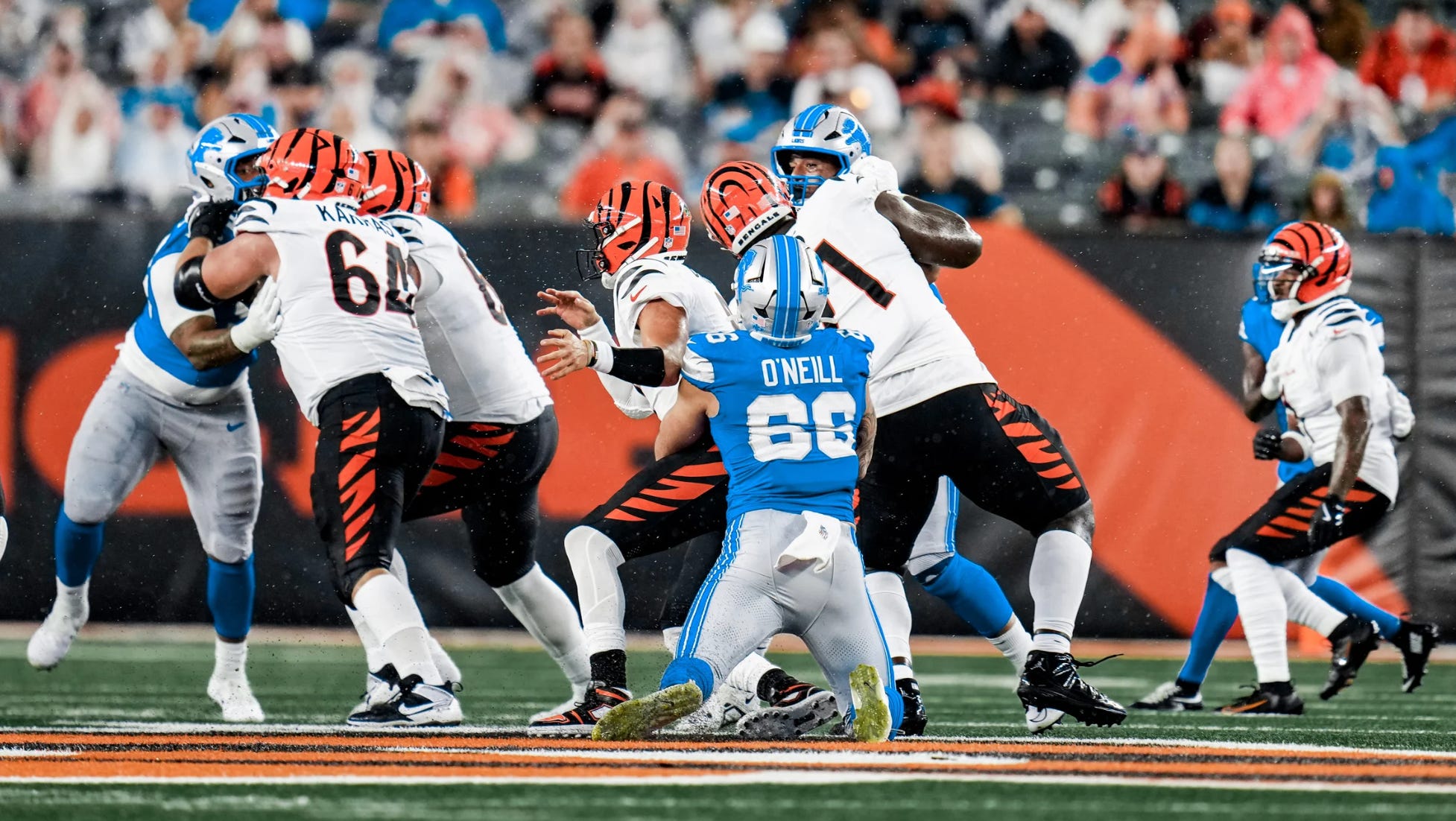
Allen Park — The start of this decade was rough for a lot of us. Eric O’Neill was just another one of the world’s punching bags.
A high school senior at the start of the COVID-19 pandemic, much of O’Neill’s final football season at Tottenville (N.Y.) was lost. With a lack of opportunities to showcase his ability, his college recruitment dried up, and some of the earlier offers he received were withdrawn.
Instead of continuing his football career at a Division I school, O’Neill was funnelled to a FCS program far closer to his Staten Island home, Long Island University.
At Long Island, things quickly bottomed out. The world kept punching and O’Neill wasn’t putting up his hands to deflect the blows.
His struggles started in the classroom. O’Neill will tell you he wasn’t the smartest kid, but listening to him talk years later, that doesn’t make sense. The bigger, self-admitted issues — effort and maturity — resulted in failing nearly every class during his first semester of college, tanking his GPA to an unsightly 1.0.
Those struggles and self-doubt carried to the football field. He was pinned to the bottom of the team’s depth chart, wasn’t meshing with the coaching staff, saw action in only three games and barely made a dent on the stat sheet.
A few months into his college experience, O’Neill confidence was shot and he was about done with all of it, ready to quit school and football. He didn’t necessarily lose his love for the game, it just felt easier to walk away before he was kicked off the team.
That’s when he got a lifeline that turned everything around.