


Phoenix, Ariz. — There’s little question the Detroit Lions have been actively re-shaping the roster this offseason, but not necessarily in the ways fans had hoped.
The Lions have signed a dozen outside free agents, retained a handful of their own contributors, and picked up an offensive lineman in a trade. However, outside center Cade Mays — the crown jewel of the team’s free agency class — the Lions have exclusively added players on one-year contracts, including at edge rusher and offensive tackle, two universally agreed upon premium positions.
The conservative approach has sparked reactions ranging from confounded to angry, with general manager Brad Holmes picking up the nickname “Bargain Bin Brad” on social media and talk radio.
While demeaning to the talent the Lions have signed, the root sentiment isn’t wrong. The Lions have plugged their holes with a lot of low-cost talent. There aren't many starting offensive tackles not on rookie contracts that cost $5 million, nor edge defenders who have averaged more than 600 snaps per season that run $3 million. Additionally, Isiah Pacheco, Christian Izien, Roger McCreary, Damone Clark, Greg Dortch and Payton Turner signed deals ranging from veteran minimum to under $2 million.
Holmes went shopping at TJ Maxx, not Saks Fifth Avenue. That’s indisputable. However, what continues to be a point of confusion is why the team has taken that approach.
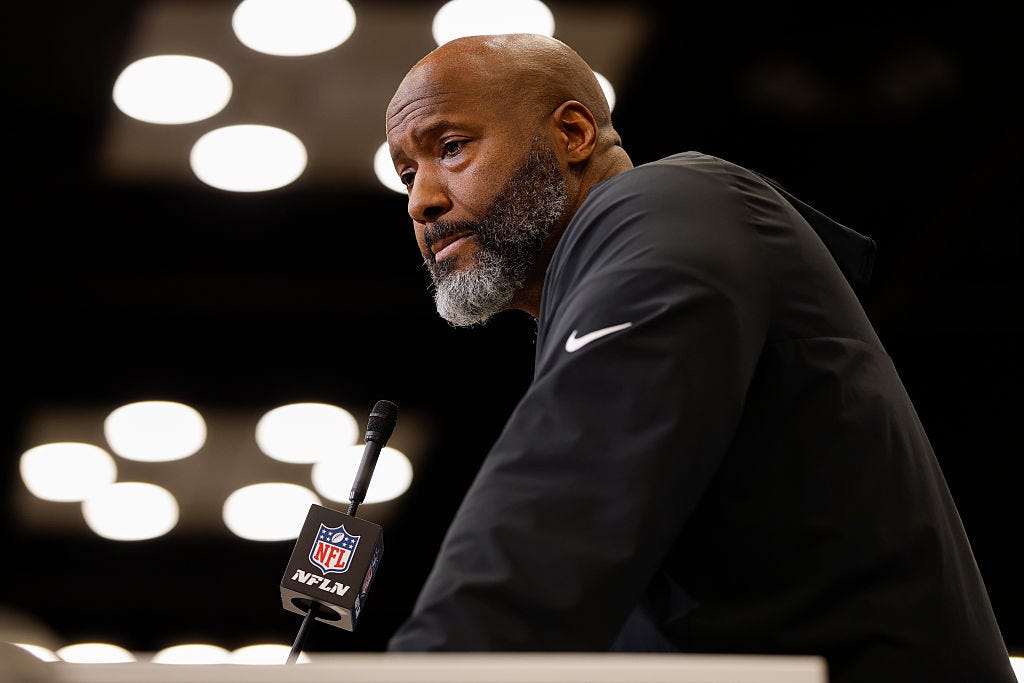
Here’s what Holmes had to say on the topic when he joined me and my three co-hosts on the “Lions Collective” podcast earlier this week.
"When we're looking at the constraints that we have financially entering in, it's like, 'OK, we're not going to be able to do a lot of multi-year deals,' because what we're trying to do with these extensions that we have upcoming, the implications that it would have on our cap would be — I don't want to call it crippling — but it would have been hard to overcome," Holmes said. "We were kind of limited in how many multi-year deals that we actually could get."
Contextualizing Detroit’s cap situation
That’s always been the heart of the conversation. There’s only one pool of funds, the salary cap, and you can spend it any number of ways. When the Lions hired Holmes, coming off an eight-year run as a director of college scouting in Los Angeles, the franchise's clearly defined goal was building through the draft.
And they’ve done that, better than they’ve probably expected. In his five years at the helm, they’ve landed 14 clear starters and several key reserves. Among that group, seven have been named to at least one Pro Bowl and six have earned contract extensions near the top of the market at their positions.
Four others, the highly productive quartet selected during the first two days of the 2023 draft, are on the docket for extensions this offseason. The new money assigned to Jack Campbell and Jahmyr Gibbs has the potential to be market-resetting at their respective positions. And even though both are recovering from concerning injuries, Sam LaPorta and Brian Branch won’t come cheaply.
This is where Detroit is choosing to spend its money, including a significant portion of the more than $20 million in cap space they have remaining this offseason. Most teams haven’t had this kind of internal success, requiring several monster extensions that consume so much of the team’s resources.
Let’s add some context, based on research.