


As promised in Thursday’s mailbag post, here’s a second wave of your questions.
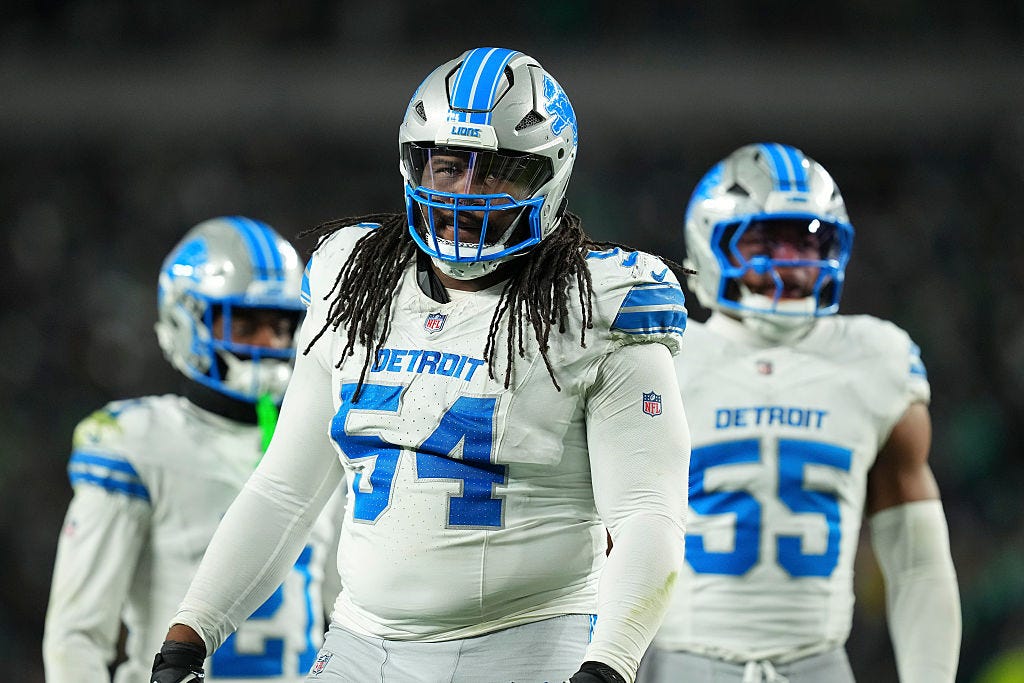
Q: What is the likelihood that Alim McNeill does/doesn’t return to his pre-ACL form? — Charles Wolfson
Justin: Given his age — he turns 26 this week — and the advancements made with ACL repairs, I have a difficult time believing McNeill won’t return to form.
When I talked to him ahead of his return last season, his strength and flexibility were all the way back. In terms of flexibility, it was actually better post-injury than pre-injury.
Regardless, no matter how good a player feels at the end of their rehab, from strength and conditioning standpoints, being in football shape is different. He missed a full offseason and the rust showed up in his inconsistency.
He’ll be more than 18 months removed from surgery come training camp, allowing him to ramp up with the rest of the roster. I wouldn’t be surprised in the slightest to see 40 pressures, 5.0 sacks and steady run defense this season.
Q: Give us your thoughts on who is in the starting secondary week 1? — Brandon Goddard
Justin: I hit on this topic in my roster thoughts post last week. It should be Arnold and Reed on the outside, with McCreary manning the slot to open the season. However, I think there’s a scenario where Abney pushes the veteran with a strong camp and takes over at some point during the campaign.
At safety, it’ll clearly be Kerby Joseph as the free safety, if he’s healthy enough. I anticipate Chuck Clark and Christian Izien will compete to backfill Brian Branch’s snaps, but I give the slight edge to Izien winning the job given the Lions targeted him first in free agency (and paid him a little more).
If Joseph’s knee remains uncooperative, it’ll come down to Avonte Maddox or Thomas Harper replacing those snaps. Both played well in spot duty last season. It’s a coin flip, but given the experience, I suppose I’d take Maddox if forced to choose.
Q: Without their All-Pro safeties completely healthy, do you think the Lions lessen what they ask of that position this season? — Kuehn Observations
Justin: Just because of where they’re located on the field, safeties are always going to be critical to communication in the back end. That won’t change, although there may be limits on how much the group is able to check into different looks.
From a schematic standpoint, you’re less likely to see the Lions trust the current collective with the same man-to-man coverage assignments Branch handles. You might also see a modest uptick in Cover-2 man or Cover-3 vs. Cover-1, just to compensate for the lesser center-field range of the non-Joseph deep safeties.
Q: Week 14, who is starting, Malcolm Rodriguez or Jimmy Rolder? — Josh Stein
Justin: Without seeing a single practice this offseason, an assessment would be speculative. When lacking visual data, I tend to lean to the conservative answer, which would be Rodriguez.
I’m looking forward to studying Rolder’s Michigan film in the next several days to gain a better feel for his skill set. That might change my opinion, but I can’t immediately get past how few defensive snaps he logged during his college career.
Q: Losing DJ Reader and Roy Lopez leaves them missing some serious beef and a LOT of snaps in the middle. Tyleik Williams will take a bunch, but who is helping him pick up those “dirty work snaps”, locking down the middle and keeping the LBs clean? — Jay
Justin: If Williams is playing 35-40 snaps per week, which I think is reasonable, given he regularly handled that type of workload at Ohio State, how many more nose tackle-type reps do you suspect the Lions will need? Maybe 10 per week.
Onwuzurike should backfill some of the snaps on the interior, but in terms of a gap-clogger, the current contenders are recent free-agent addition Jay Tufele, UDFA Aidan Keanaaina, or one of the lesser-used holdovers, such as Chris Smith or Tyler Lacy.
As I wrote in yesterday’s mailbag, Keanaaina’s college resume intrigues me. I look forward to seeing how he looks when the pads come on this August.
Q: What are the odds we see contract extensions before the season starts for Jahmyr Gibbs, Jack Campbell, Sam LaPorta, Brian Branch. — Philip Fracassi
Justin: I feel strongly that Campbell will get done before the season. I’d put it north of 80%. Gibbs and LaPorta are in the second wave. Having executed the fifth-year option on Gibbs’ rookie deal, and having the leverage of the franchise tag in 2028, it affords the Lions some patience in the process, even if I believe there’s an organizational desire to get it done.
Meanwhile, with LaPorta, it could mirror Taylor Decker’s situation from a couple years back, where the team wanted confirmation about the player’s health via some padded practices in camp. I’d still put both Gibbs and LaPorta getting done ahead of Week 1 above 50%.
I’m less certain about Branch. I could see the Lions being hesitant to pay max value without seeing him back in action, which is entirely reasonable. On the other side of the equation, the player’s camp is probably not interested in taking a discounted deal, particularly if he has to forsake significant guarantees. The situation could easily drag out into the season.
Q: You’ve written about contract extensions in raw dollars, but that’s essentially Monopoly money. Can you talk about Gibbs, LaPorta, and Campbell in terms of cap %? — Dave McCreedy
Justin: Tell Sheila Hamp it’s Monopoly money when she cuts those bonus checks.
The problem with cap percentage is it’s a moving target. NFL deals can be structured hundreds of different ways to manipulate the early cap hits, then restructures can shift the balance again. Remember, Jared Goff went from accounting for more than 23% of the team’s cap in 2026 to a little more than 12% with a few strokes of a pen.
So the concrete analysis you’re looking for doesn’t exist because it’s not a firm, set figure with these larger, long-term contracts. It’s fluid, which is why I rarely look more than a year ahead.
Q: What makes a player a good special teams player? — Dan Lehner
Justin: On coverage groups, it’s many of the same skills that make a player a good defender. Speed, short-area quickness, an understanding of leverage in pursuit angles, the ability to shed blocks and make open-field tackles.
On return groups, it’s about good blocking in space. That’s a marriage of strong footwork and hand placement, while understanding the anchor points to create the designed lanes for your return man.
But, more than all of that, it’s a want-to. It’s relentless competitiveness to win your individual rep. Pro athletes are naturally competitive, but those who can consistently tap into that extra gear, which extends to their preparation through film study and practice, are the guys we often view as special teams standouts.
Q: Brad and Dan intimated some players need competition to get back their grit. Could Rolder have been drafted to push Derrick Barnes? — Mike Steggerda (@SparkTheUSA)
Justin: I’m not sure if the team’s brass was targeting individual players with those comments. They’ll pull the plug on a player who doesn’t meet organizational standards for effort, heart and passion.
With Barnes, he wouldn’t have received a second contract from the Lions if they had concerns about his grit. I understand that fans want to see his production match the investment, and it didn’t last season, but I don’t see the Rolder selection through that lens. Schematically, I see the newcomer more as a contender to backfill Anzalone’s weakside role.
Regarding Barnes, this will be an important season. Most of his 2027 pay is tied to a non-guaranteed option bonus. If he’s not more impactful, it’s not outside the realm of possibility that the team moves on next offseason.
Q: Are we really supposing that Isiah Pacheco is going to be our No. 2 back? — Hermy (@Hermaphro)
Q: Should we be worried about the running back room. If Gibbs gets hurt, it could ruin the season. — TyKuhn (@1tonykuhn)
Justin: Yes, Pacheco is currently the clear-cut No. 2 back. Based on David Montgomery’s usage last season, that will likely amount to 10-12 touches per game.
There are some doubts based on Pacheco’s performance the past two seasons, but he’s still in his physical prime, should benefit from better blocking, more under-center runs, as well as being two full years removed from breaking his leg.
Pacheco is a good athlete, can catch passes out of the backfield and is a plus pass protector, which is a significant value enhancement in his role.
It’s a one-year deal. If it works out, re-upping probably won’t break the bank. And if he can’t return closer to his 2023 form, the Lions can spin the wheel again next offseason (or if you buy what podcast partner Will Burchfield put out there Thursday night, maybe Sione Vaki is ready to step up). Finding a backup running back is probably one of the easier spots to fill on a roster.
In terms of fears about Gibbs getting hurt, you can say it about any position where you’d lose an All-Pro-caliber talent. Losing Penei Sewell, Jared Goff, Amon-Ra St. Brown, Aidan Hutchinson or Jack Campbell is going to result in significant drop-offs that are difficult to overcome, to varying degrees.
You’re lucky if you have competent backups at a handful of positions. You’re never going to have stellar depth at every spot.
Q: Consensus seems to be that Jack Campbell is getting a market-setting extension, so where does valuing off-ball linebackers more than every other team in the league come from? Dan? Carry-over from AG? Whose philosophy is this? — Dale Disill
Justin: Do they value it more than the Ravens, who traded for Roquan Smith and gave him a market-resetting deal in 2023? Or the 49ers, who have drafted and paid studs at the position for years, from Patrick Willis and NaVorro Bowman to Fred Warner and Dre Greenlaw.
Good defenses often have a solid heart in the middle. The Lions targeted this by drafting Jack Campbell, and were proven right with his first-team All-Pro selection just three years into his career.
With that kind of success comes a hefty second contract. The Lions didn’t set out to pay him a market-setting deal when they drafted him, but if you told Brad Holmes that Campbell would earn that kind of pay day this quickly, the GM would still happily make the selection.
The Lions wanted their Willis, Ray Lewis, Brian Urlacher, Luke Kuechly. They wanted a Chris Spielman. They wanted a durable, intelligent, tone-setter, who could set the standard in the locker room, on the practice field and on Sundays, who could hold up his end of the bargain every week, while also making his teammates better by cleaning up their alignments and checking into better calls pre-snap.
I don’t think that’s a Dan Campbell or Aaron Glenn thing. I think that’s something every NFL decision-maker and defensive coach wants, the Lions just did a better job of identifying their guy and paying a premium in the draft to make it happen.
Q: Who has the most upside at guard? — Pete Mo
Justin: I’m going to assume you mean at left guard, otherwise the answer is clearly Tate Ratledge, who genuinely has Pro Bowl potential.
On the left, I wouldn’t be quick to toss Mahogany aside. Having covered this team for closing in on two decades, I understand development isn’t always linear, and, as a team sport, the players around you can have a significant impact on your performance.
Mahogany was slotted between two aging linemen who battled injuries that impacted their practice time in 2025. That’s not an ideal situation to maximize young talent. Had he been between a healthy Decker and Frank Ragnow, we probably feel differently about Mahogany heading into the 2026 campaign.
Miles Frazier has upside as well, but his performance in limited snaps last season showed how far away he was from realizing it. Juice Scruggs and Ben Bartch are veteran depth that should push Detroit’s returning options to maximize their potential.
Q: Will there be a change in run blocking scheme with personnel changes? — @caverjosh.bsky.social
Justin: The Lions already run a varied scheme, with a lean toward zone blocking in the ground game.
Cade Mays and Blake Miller have experience in both schemes, but I feel like Gibbs is better running behind zone concepts. So even if there’s a slight tilt toward more gap runs, they’ll probably continue to utilize more zone overall.
Q: Knowing the Lions’ opponents, which game(s) are you looking forward to the most, and which city are you most excited to be travel (or return) to this year? — Dad Dalley
Justin: Germany is going to be an adventure (and a budget drain). I wish there was a bye week after the game, providing more time to explore the region, but that doesn’t sound like it’s in the cards.
In terms of the road slate, there’s some appeal with Miami, if only because I’ve traveled there just once. Hopefully that hits in November or December, when the batteries can be recharged with a little sun and Cuban cuisine.
Also, I’m going to make an effort to have a better experience in Buffalo, after a dud my previous visit. I’ll take the blame on that one, since I was coming off the flu during the week. Bonus points for their new stadium, which opens this summer.
I’m definitely disappointed that New Orleans is a home game. It will forever be one of my favorite cities to visit.
In terms of the football, I’m looking forward to the game against the defending AFC champion Patriots at Ford Field. That’s likely destined for primetime and should be an excellent measuring-stick matchup.
Love the Mail Bag Posts!
You are the man, Justin.