


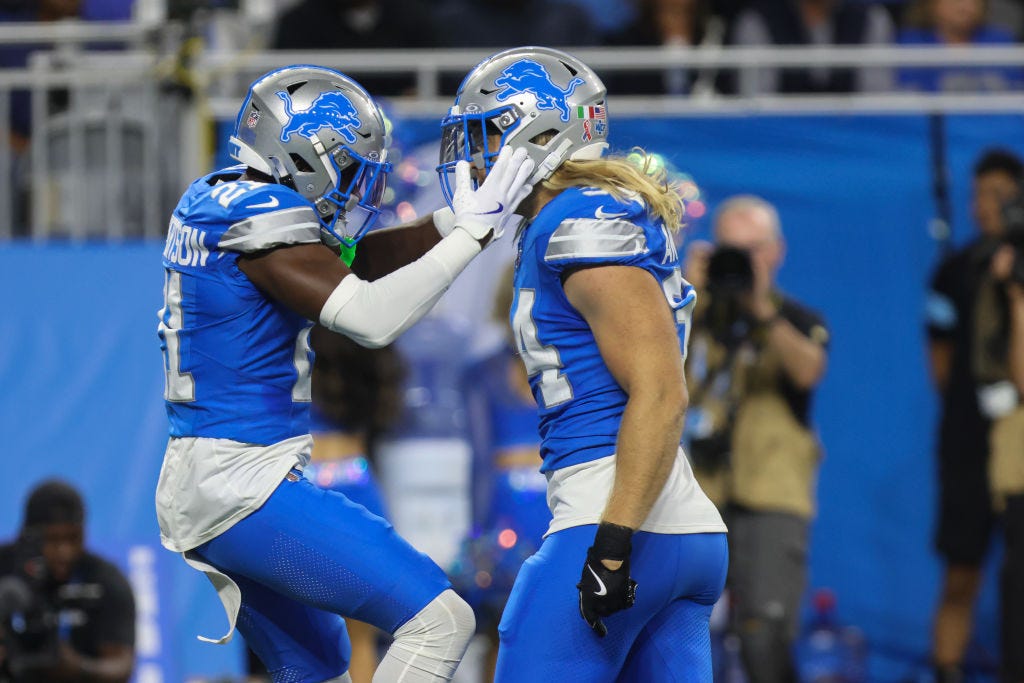
Here are three observations after a second viewing and a night to ponder the Detroit Lions’ 29-24 loss to the Pittsburgh Steelers.
On the precipice of change
Despite hope, arguably even an undeserved expectation that the Lions would find a way to turn the season around in time to sneak into the postseason, I couldn’t stop my mind from drifting to the impending finality of the roster’s current iteration during the pre-game lineup introductions.
Detroit has turned the ball over fewer times than any team this season, but turnover is going to be a necessity during the offseason. After attempting to run it back with nearly every starter from last year’s 15-win team, it became increasingly apparent with each passing week that this wasn’t a group capable of Super Bowl contention.
How many of those returning starters have played their last home game at Ford Field? That’s difficult to project, but linebacker Alex Anzalone, cornerback Amik Robertson, defensive tackle DJ Reader and defensive end Marcus Davenport are all on expiring contracts.
So are some backups who had key roles during this are previous seasons, including Al-Quadin Muhammad, Rock-Ya Sin, Levi Onwuzurike, Josh Paschal and Malcolm Rodriguez.
Then there are a small number of cap decisions, headlined by offensive lineman Graham Glasgow and David Montgomery. The Lions will certainly be looking to upgrade their disappointing offensive line, and parting with the veteran Glasgow would clear $5.5 million off the books.
Montgomery, as detailed late last week, is a more complex conversation. He undeniably remains capable of being a key cog in the offense, but was unintentionally phased out by an adjustment to the backfield timeshare. It’s untenable for the team and player to continue the partnership without a course correction regarding his usage.
General manager Brad Holmes has his work cut out for him, as much if not more than when he burned the roster he inherited from predecessor Bob Quinn to the ground and built a two-time division winner from those ashes.
The challenge now is different. At the start, Holmes had a blank canvas, and he painted something beautiful through the draft. But the string of successes he had with those early selections has required a string of top-of-the-market extensions, leaving less financial flexibility to plug the team’s current holes, which starts with the notoriously difficult to rebuild trenches.